 ITA
 DEU
 FRA
 ESP



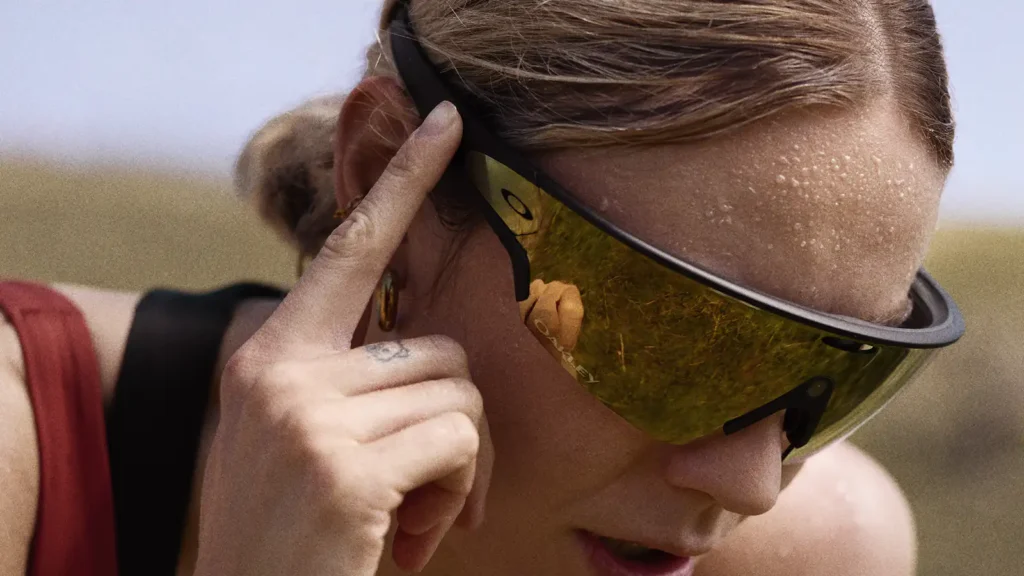
Sunglasses are the accessory many runners buy last and replace first. They grab any old pair, then discover it slides down their nose as soon as they sweat, fogs up on the climbs and turns far too dark in the woods. It is one of the questions we hear most often in the shop: “do I really need running sunglasses, or will the ones I have do?”
In this guide to Oakley running sunglasses we start from the brand that, more than any other, has tied its name to sports eyewear, and try to put things in order: where it comes from, what the acronyms on every product page mean, what to look at when you choose and which Oakley models you will find at our shop, grouped by use.
At a glance
- Oakley was founded in California in 1975 by Jim Jannard and is now part of the EssilorLuxottica group. The material of its first motorcycle grips, Unobtainium, is still what the nose pads and temple tips are made of, keeping the glasses in place when you sweat.
- For running you need sunglasses that are light, stable and wraparound, with a lens suited to the light you run in most often. Style comes second.
- A Prizm lens is not just a dark lens: it filters certain colours to boost contrast. There are different versions for road, trail and low light.
- If you often run in the woods or at different times of day, look at photochromic lenses (Clear to Black Iridium): they go from almost clear to dark depending on the light.
- At our shop you will find four categories: performance (the Sutro family, Radar EV, EVZero Blades, Cybr Dyno, Stunt Devil), smart glasses (Oakley Meta Vanguard and HSTN), lifestyle (Holbrook, Frogskins, Latch) and junior (Resistor JR).
- Size matters as much as the lens: frame width, fit and bridge height decide whether the glasses stay put. The safest way is to try them on.
Contents
- Oakley: from motorcycle grips to athletes’ eyewear
- Oakley technologies in two minutes
- How to choose running sunglasses: seven things to consider
- Category 1: performance sunglasses
- Category 2: Oakley Meta smart glasses
- Category 3: lifestyle, for after the run
- Category 4: junior
- Comparison table
- Which Oakley to choose: eight runner profiles
- Frequently asked questions
- Conclusion
Oakley: from motorcycle grips to athletes’ eyewear
The Oakley story begins in a California garage in 1975. Jim Jannard starts out with 300 dollars and an idea: a motocross handlebar grip that will not slip out of your hands, even when wet. He sells it out of the boot of his car at motocross races. The name comes from his dog, an English setter called Oakley Anne.
That grip material is the same one you still find today on the nose pads and temple tips of Oakley sunglasses: it is called Unobtainium and it has a curious property, namely that it grips harder when it gets wet. For anyone who runs and sweats, that is where everything starts.
The first sunglasses arrived in 1984: the Eyeshades, a single-lens shield designed for sport. The following year came the Frogskins, the first casual model, still in the catalogue today. From there Oakley became the brand of endurance sports: cycling, triathlon, running, skiing. In 2007 it was acquired by Luxottica for 2.1 billion dollars, and today it is part of EssilorLuxottica.
The latest chapter is recent: in 2025 Oakley and Meta unveiled the brand’s first smart glasses, with a built-in camera, audio and voice assistant. More on those further down.
Oakley technologies in two minutes
On Oakley product pages you always see the same acronyms. Knowing them helps you understand what you are buying and why two similar pairs have different prices.
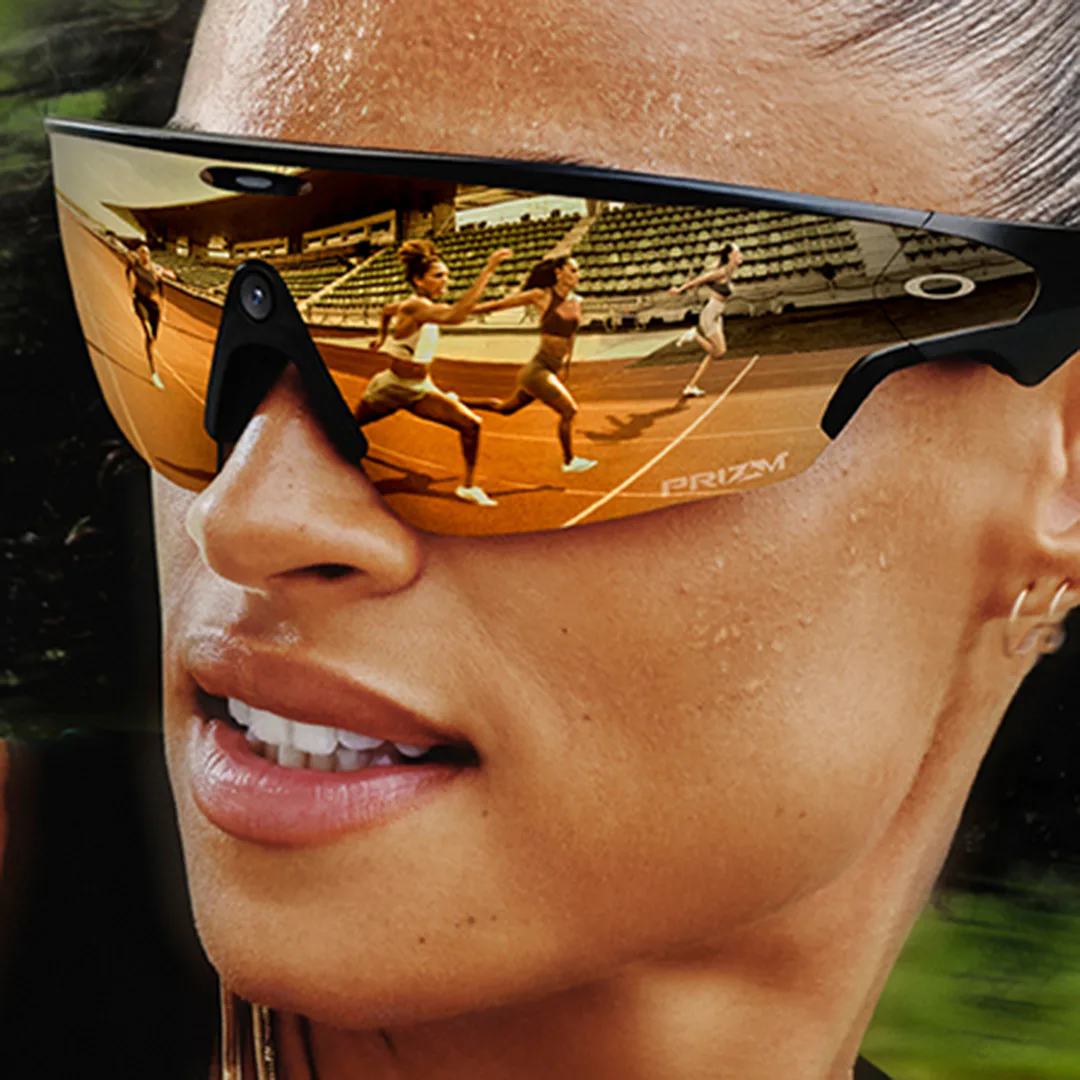
- Prizm™: Oakley’s most important lens technology. It does not just darken: it works on specific colours to bring out details the naked eye misses, like potholes on the tarmac or roots on a trail. There are dedicated versions: Prizm Road and Road Black for the road, Prizm Trail and Trail Torch for trails (they enhance browns and reds and make greens pop, so you read the terrain better), Prizm Low Light for grey days and early mornings.
- Clear to Black Iridium Photochromic: Oakley’s photochromic lens. It starts almost clear and darkens with the light. It is the lens for runners in changing conditions: woods, dawn, dusk, uncertain weather.
- Plutonite®: the lens material, a polycarbonate that filters UV rays. Light and impact resistant.
- HDO® (High Definition Optics): the set of optical standards Oakley uses to measure lens sharpness and freedom from distortion. You will see it mentioned mostly on the lifestyle models and on the Radar EV.
- O Matter™: the frame material. Light, flexible, impact resistant and it keeps its shape over time.
- Unobtainium®: the material of the nose pads and temple inserts. The more you sweat, the better it grips.
- HyperGrip™: the 2025 innovation, launched with the Stunt collection. Instead of squeezing the head at a few points, it spreads the grip over a wider area thanks to flexible temple tips. Oakley developed it over two years together with fifteen professional athletes.
A rule of thumb: the frame (O Matter and Unobtainium) decides whether the glasses stay put, the lens (Prizm or photochromic) decides what you see. When you choose, think about both.
How to choose running sunglasses: seven things to consider
You do not choose running sunglasses the way you choose everyday ones. These are the seven questions we ask ourselves in the shop before recommending a pair.
1. Wraparound single lens or two separate lenses?
For running, the most comfortable choice is almost always a wraparound single lens (Sutro, Radar EV, EVZero). It covers more at the sides, protects you from wind, dust and insects and leaves no “gaps” in your field of view when you turn your head. Two-lens sunglasses (Holbrook, Frogskins, Latch) are designed for everyday life: fine for a gentle jog, less so for a long run in the sun or a technical trail.
2. Size, frame width and fit
This is where people go wrong most often. On our product pages you will find three figures:
- Frame width in millimetres (for example 126 mm for the Sutro S, 134 mm for the Sutro, 138 mm for the Radar EV): it shows the overall width of the front. The higher it is, the bigger the glasses.
- Fit, narrow, regular or wide: it describes how much the glasses wrap and how wide they sit on the face.
- Bridge, that is where the glasses rest on your nose. Oakley makes most models with a high bridge and some Low Bridge Fit versions, designed for people with a low nose bridge or high cheekbones, where the glasses tend to touch the cheeks.
If you have a small face, start with the S versions (Sutro S, Sutro Lite S, Stunt Devil S). If the glasses touch your cheeks when you smile, or bounce up and down while you run, it is the wrong size, not the wrong model.
3. The lens: how much light, which colour
Sunglass lenses are divided into filter categories by the European standard EN ISO 12312-1: from 0 (almost clear) to 4 (very dark, for glaciers and high mountains). Category 3 is the most versatile for summer running. Category 4, on the other hand, must not be used while driving.
Then there is the colour of the Prizm lens, which matters as much as how dark it is: a Prizm Road works on the contrasts of the tarmac, a Prizm Trail on those of the trail, a Prizm Low Light keeps your vision bright when the sky is overcast. If you often run in the woods or at different times of day, a photochromic lens saves you from having to choose.
An important note: the colour of the lens tells you nothing about UV protection. That depends on the material and treatments, and on Oakley lenses it is always guaranteed.
4. Polarized or not?
Polarized lenses cut glare from wet tarmac, water and snow, and they are great for driving or at the lake. For running they are a personal choice: some displays (watch, phone, bike computer) seen through a polarized lens can look dark or patchy. If you check your watch a lot while running, try it first with the lens you want to buy.
5. Weight and stability
Running sunglasses should make you forget you are wearing them. Look at the weight, of course, but above all at where the grip works: Unobtainium nose pads, temple tips, the HyperGrip system. Ultra-light glasses that slip are worse than slightly heavier ones that stay put.
6. Ventilation and fogging
On climbs, in the heat or in damp cold, the lens fogs up if air cannot circulate. Rimless or semi-rimless frames (no rim, or a rim only along the top) and lenses with vents (like on the Cybr Dyno) help a lot. The distance between lens and face matters too: glasses that sit too close fog up sooner.
7. Cap, helmet and prescription lenses
If you run in a cap or also ride a bike, check that the temples do not get in the way: the slim temples of the Sutro S are designed precisely to work with caps and helmets. If you wear prescription glasses, some models (Radar EV, Holbrook, Frogskins, Latch) are compatible with Oakley prescription lenses: ask us before ordering.
In one line: stability first, then the lens, then style.
Category 1: performance sunglasses
These are the glasses born for sport: wraparound single lens, light frame, Unobtainium nose pads. This is where the real choice for running is made.
The Sutro family: the widest range, and the most popular
The Sutro was born with an urban cycling look: a large shield lens that covers a lot and protects from wind and sun. Today it is a whole family, and at our shop you will find it in six versions. The main difference comes down to two things: how big the lens is and whether the frame surrounds it completely or only along the top.
Oakley Sutro is the original: full frame, large lens, size L (134 mm), wide fit. Maximum coverage and protection. Who it is for: runners who want very generous coverage for long runs in the sun, exposed trails, cycling. Who it is not for: people with a small face, or anyone who wants a clear view downwards (the lower rim of the frame is noticeable).
Oakley Sutro S is the compact version: same idea, size S (126 mm), slim temples that work well with caps and helmets. Who it is for: small or medium faces, runners who often run in a cap. Who it is not for: people with a wide face looking for maximum coverage.
Oakley Sutro Lite removes the lower part of the frame: the lens is free at the bottom, your downward view is cleaner and air circulates better. Size M (133 mm), wide fit. Who it is for: for us, it is the Sutro best suited to running. Runners who often watch where they put their feet (trails, descents) and those prone to fogging. Who it is not for: anyone who wants the full protection of a full frame.
Oakley Sutro Lite S is the Sutro Lite in a smaller format: size M (130 mm), wide fit, same semi-rimless construction. Who it is for: small and medium faces that want the benefits of the Lite.
Oakley Sutro Lite Sweep is the modern reinterpretation of the 1984 Eyeshades, the first Oakley sunglasses: an even more wraparound lens and wide visual coverage. Size M (133 mm), wide fit, high bridge. Who it is for: runners who want maximum coverage and a look that does not go unnoticed.
Oakley Sutro Lite Photochromic is the Sutro Lite with a Clear to Black Iridium Photochromic lens. Size M (133 mm), wide fit. Who it is for: runners who train in the woods, at dawn or at dusk, and those who head into the mountains and go from sun to shade dozens of times in one outing. If you have to pick one pair for everything, it is one of the most sensible choices.
In one line: the Sutro protects, the Sutro Lite lets you breathe, the S versions fit smaller faces, the photochromic takes the light out of the equation.
-
Sutro Lite
Original price was: 188,00€.178,00€Current price is: 178,00€. VAT included -
Sutro Lite Photochromic
Original price was: 218,00€.207,00€Current price is: 207,00€. VAT included -
Sutro lite S
Original price was: 188,00€.178,00€Current price is: 178,00€. VAT included -
Sutro
Original price was: 178,00€.169,00€Current price is: 169,00€. VAT included -
Sutro S
Original price was: 178,00€.169,00€Current price is: 169,00€. VAT included -
Sutro Lite Sweep
Price range: 178,00€ through 197,00€ VAT included


Radar EV Path: the runners’ classic
The Radar is one of Oakley’s longest-running sports models, and the Radar EV Path version extends the lens upwards to give a wider field of view when you run with your head down or ride a bike. HDO lens technology, O Matter frame with Unobtainium inserts, size XL (138 mm), regular fit with a high bridge. It is compatible with Oakley prescription lenses.
Who it is for: runners looking for “traditional”, very stable sports sunglasses for the road, races and hard training. People who wear prescription glasses. Who it is not for: people with a small face: with a 138 mm frame width it is one of the largest in the range.
EVZero Blades: lightness above all
Oakley EVZero Blades is the most minimal model in the range: no frame around the lens, which acts as the structure itself. Toric single lens in Plutonite, Unobtainium inserts on nose pads and temples, size L (134 mm), wide fit, high bridge. It is one of Oakley’s lightest sunglasses and you barely feel it once it is on: it is almost not there.
The EVZero Blades Photochromic version comes with the Clear to Black Iridium Photochromic lens.
Who it is for: runners who hate feeling their glasses on their face, who run fast on the road and in races, who want a field of view without edges. Who it is not for: anyone who is not gentle with their gear. Without a frame the edge of the lens is exposed: always put it back in its case.
Cybr Dyno: rimless, ventilated, modern
Launched in 2025, the Cybr line takes the rimless idea of the EVZero further with a more technical design. Oakley Cybr Dyno has a toric Plutonite lens with Prizm technology, built-in vents in the lens to reduce fogging, and Unobtainium inserts on the temples and tips. Size L (134 mm), narrow fit.
Who it is for: runners who sweat a lot and often end up with a fogged lens, those looking for light glasses with a contemporary look. Who it is not for: people with a very wide face: the fit is narrow, try it on.
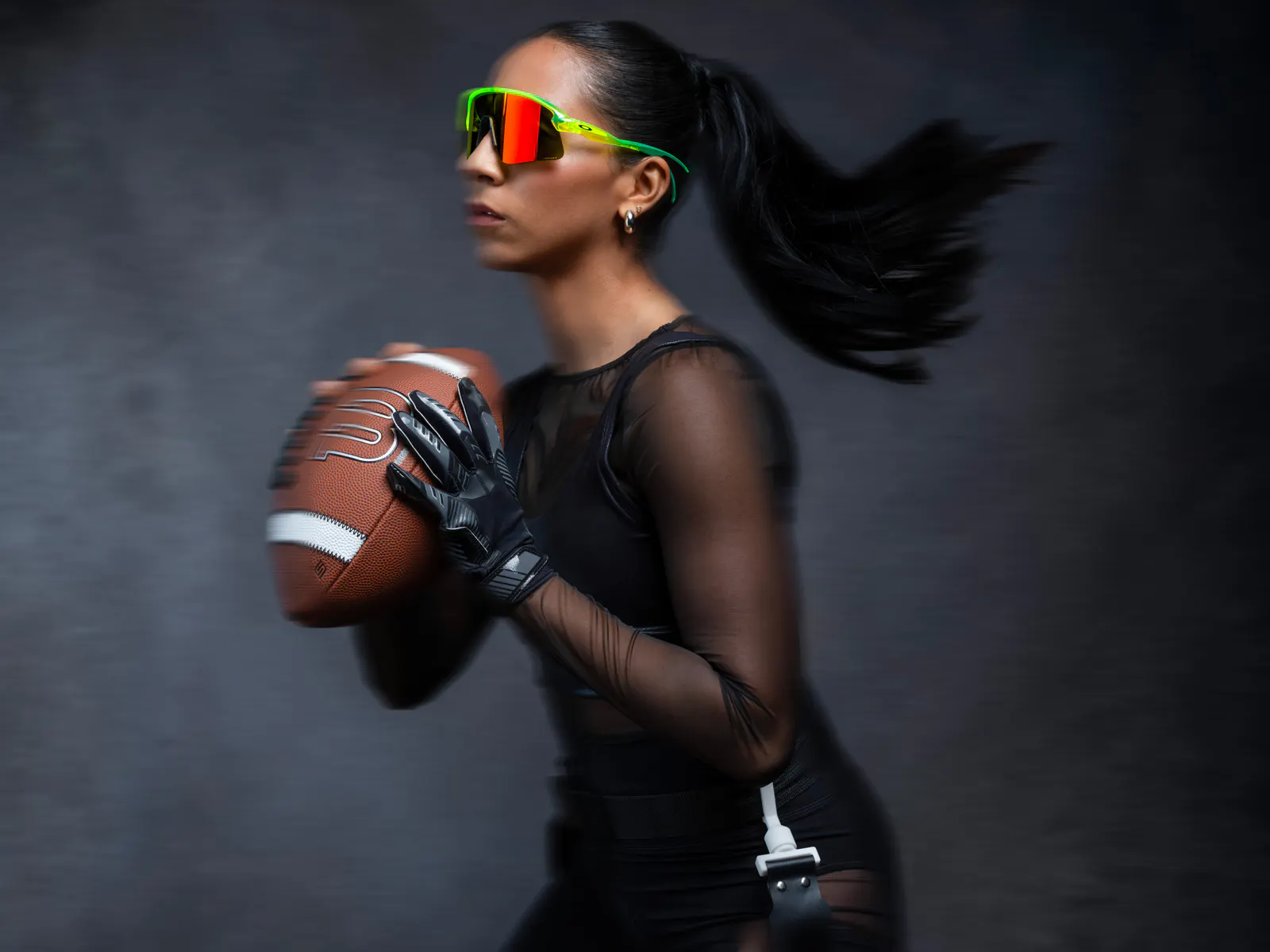
Stunt Devil and Stunt Devil S: HyperGrip stability
The Stunt collection, launched in September 2025, is the one that introduced HyperGrip technology. Oakley Stunt Devil (size L, 135 mm) and Oakley Stunt Devil S (size M, 131 mm) have an O Matter frame, a narrow fit with a high bridge and two interchangeable Unobtainium nose pads, so you can adapt the fit to your nose.
Who it is for: runners who want maximum hold: technical descents, trails with jumps, workouts with changes of direction, anyone whose glasses have always bounced around. Who it is not for: those who prefer a lighter grip and want glasses to wear away from running too.
-
Radar EV
Original price was: 214,00€.194,00€Current price is: 194,00€. VAT included -
Evzero blades
Original price was: 188,00€.170,00€Current price is: 170,00€. VAT included -
Evzero blades photochromic
Original price was: 228,00€.216,00€Current price is: 216,00€. VAT included -
Cybr dyno
Original price was: 188,00€.178,00€Current price is: 178,00€. VAT included -
Stunt devil
Original price was: 214,00€.203,00€Current price is: 203,00€. VAT included -
Stunt Devil S
Original price was: 214,00€.203,00€Current price is: 203,00€. VAT included


Category 2: Oakley Meta smart glasses
Here the question changes. It is no longer just “what do I see”, but also “what do I record and what do I listen to”. Oakley and Meta launched two models in 2025, and you will find both at our shop.
Oakley Meta Vanguard: the smart glasses for sport
Oakley Meta Vanguard has been on sale in Italy since October 2025 and is designed for high-intensity sports: running, trail, cycling, skiing. Wraparound single lens with Prizm lenses, a 12 MP ultra-wide (122°) camera in the centre, video up to 3K, two open-ear speakers and five microphones. It is IP67 rated, so it resists sweat, dust and water.
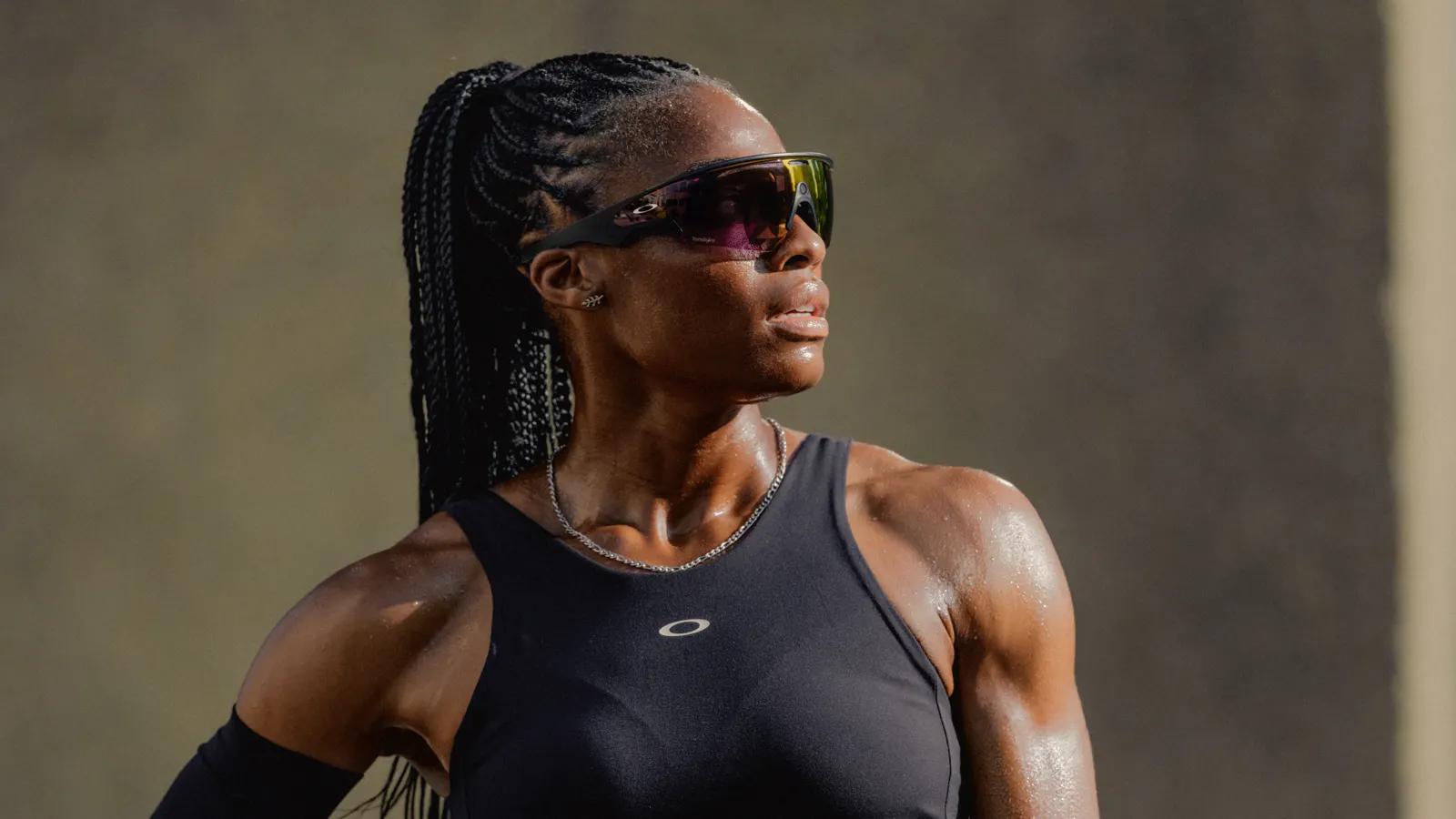
What runners care about most is the integration with Garmin and Strava: you can ask the Meta AI assistant for your pace or heart rate by voice without looking at your watch, automatically start recording video when you hit certain workout milestones and, with Strava, overlay your workout data on the clips you have filmed. If you are still choosing a watch, we compared the models in our guide on which Garmin to choose for ultra trail.
Stated battery life: up to 9 hours of use (6 with continuous music playback), plus 36 hours with the charging case.
Who it is for: runners who want to share their outings with photos and video without pulling out their phone, who run with music but want to hear the traffic, who use Garmin or Strava every day. Who it is not for: anyone who only wants good sunglasses. At a list price of €549, if you do not need the camera, the same money buys you two excellent performance pairs.
Oakley Meta HSTN: the smart glasses for every day
Oakley Meta HSTN follows the same philosophy in a more classic, two-lens shape. At our shop you will find the versions with polarized Prizm lenses, in Black and Brown Smoke frames. 12 MP camera, open-ear speakers, five microphones, up to 8 hours of battery life.
Who it is for: anyone who wants smart glasses to wear all day, including for the odd easy run. Who it is not for: runners who go fast or run technical trails: that is what the Vanguard is for.
In one line: the Vanguard is a pair of sports smart glasses that also works as sunglasses, the HSTN a pair of everyday sunglasses that also works as smart glasses.
-
Vanguard Meta
Original price was: 549,00€.521,00€Current price is: 521,00€. VAT included -
HSTN Meta
Original price was: 489,00€.464,00€Current price is: 464,00€. VAT included


Category 3: lifestyle, for after the run
These are not running sunglasses, and we do not sell them as such. But they are pieces of Oakley history, and plenty of people choose them for after the race, for travelling or for every day. All with HDO lenses, also available with Prizm, and compatible with Oakley prescription lenses.
- Oakley Holbrook: inspired by American cinema from the 1940s to the 1960s, with metal rivets and the Square O logo. Size XL (140 mm), regular fit.
- Oakley Frogskins: Oakley’s first casual sunglasses, from 1985, with an 80s style. Size XL (137 mm), regular fit.
- Oakley Latch: inspired by skate culture, with round lenses, a keyhole bridge and a clip built into the hinge to hook them onto your T-shirt. Size L, regular fit.


Category 4: junior
Oakley Resistor JR is the sports model for younger runners: a light, impact-resistant O Matter frame, non-slip Unobtainium inserts and a wraparound Prizm lens inspired by the Sutro. Perfect for kids getting started in athletics, trail running or cycling, who deserve the same protection as adults.
Comparison table
| Model | Category | Size (frame width) | Fit | Lens (per product page) | List price |
|---|---|---|---|---|---|
| Sutro | Performance | L (134 mm) | Wide | Prizm | €178.00 |
| Sutro S | Performance | S (126 mm) | Wide | Prizm | €178.00 |
| Sutro Lite | Performance | M (133 mm) | Wide | Prizm | €188.00 |
| Sutro Lite S | Performance | M (130 mm) | Wide | Prizm | €188.00 |
| Sutro Lite Sweep | Performance | M (133 mm) | Wide | Prizm | €188.00 |
| Sutro Lite Photochromic | Performance | M (133 mm) | Wide | Clear to Black Iridium Photochromic | €218.00 |
| Radar EV Path | Performance | XL (138 mm) | Regular | HDO, Prizm | €214.00 |
| EVZero Blades | Performance | L (134 mm) | Wide | Prizm | €188.00 |
| EVZero Blades Photochromic | Performance | L (134 mm) | Wide | Clear to Black Iridium Photochromic | €228.00 |
| Cybr Dyno | Performance | L (134 mm) | Narrow | Prizm | €188.00 |
| Stunt Devil | Performance | L (135 mm) | Narrow | Prizm | €214.00 |
| Stunt Devil S | Performance | M (131 mm) | Narrow | Prizm | €214.00 |
| Oakley Meta Vanguard | Smart | One size | Wraparound | Prizm | €549.00 |
| Oakley Meta HSTN | Smart | One size | Regular | Polarized Prizm | €489.00 |
| Holbrook | Lifestyle | XL (140 mm) | Regular | HDO, Prizm | €172.00 |
| Frogskins | Lifestyle | XL (137 mm) | Regular | HDO, Prizm | €141.00 |
| Latch | Lifestyle | L | Regular | HDO, Prizm | €172.00 |
| Resistor JR | Junior | Junior | Junior | Prizm | €107.00 |
Which Oakley to choose: eight runner profiles
1. I run on the road, four or five times a week. You need stable glasses you forget you are wearing. Look at the Sutro Lite or the Radar EV Path; if you have a small face, the Sutro Lite S.
2. I run in the woods, in the mountains, or at different times of day. The light changes constantly: the answer is a photochromic lens. Sutro Lite Photochromic if you want coverage, EVZero Blades Photochromic if you want lightness.
3. I am training for a marathon or an ultra in the sun. Hours of running, sweat, bright light: coverage and hold come first (and a few tips on training in the heat). Sutro, Sutro Lite Sweep or Radar EV Path.
4. My glasses always bounce around. The problem is the grip, not the lens. Try the Stunt Devil or Stunt Devil S, with HyperGrip and interchangeable nose pads.
5. I cannot stand feeling the frame. EVZero Blades or Cybr Dyno: no rims, little weight, a clear field of view.
6. My lens always fogs up. Avoid full, close-fitting frames. Cybr Dyno with its vents, or a Sutro Lite, open at the bottom.
7. I want to record my runs and hear my data by voice. Oakley Meta Vanguard, with Garmin and Strava. If everyday smart glasses are enough for you, Oakley Meta HSTN.
8. I have a small face or run in a cap. Start with the S versions: the Sutro S has slim temples designed for caps and helmets.
-
Sutro Lite
Original price was: 188,00€.178,00€Current price is: 178,00€. VAT included -
Sutro Lite Photochromic
Original price was: 218,00€.207,00€Current price is: 207,00€. VAT included -
Radar EV
Original price was: 214,00€.194,00€Current price is: 194,00€. VAT included -
Stunt devil
Original price was: 214,00€.203,00€Current price is: 203,00€. VAT included -
Vanguard Meta
Original price was: 549,00€.521,00€Current price is: 521,00€. VAT included
Frequently asked questions
Do you really need specific sunglasses for running?
It is not essential, but it makes a difference. Running sunglasses are lighter, stay put when you sweat, wrap around your face to protect you from wind and dust, and have a lens designed to help you read the ground. Everyday sunglasses often slip, fog up and let light in at the sides.
What are Oakley Prizm lenses?
They are lenses that work on specific colours to boost contrast, not just to darken your view. There are versions dedicated to the road (Prizm Road), trails (Prizm Trail) and low light (Prizm Low Light).
Photochromic or Prizm lens: which is better?
If you almost always run in the same light, a Prizm lens chosen for your terrain is the most precise solution. If the light changes often (woods, dawn, mountains), a photochromic lens saves you from switching glasses.
Are polarized lenses good for running?
They cut glare from wet tarmac and water, but some displays, like your watch, can look dark or patchy. If you often check your watch while running, try them first.
How do I find my Oakley sunglasses size?
Look at the frame width in millimetres and the fit on the product page. If you have a small face, start with the S versions. The right pair does not touch your cheeks when you smile and does not move when you shake your head. The safest way is to try them on in the shop.
Can I fit prescription lenses to Oakley running sunglasses?
On several models, yes: the Radar EV, Holbrook, Frogskins and Latch are compatible with Oakley prescription lenses. Get in touch before ordering to check the model you are interested in.
Do Oakley Meta Vanguard glasses work with Garmin?
Yes. They connect to Garmin and Strava: you can ask for your pace and heart rate by voice, automatically record video when you reach workout milestones and overlay your workout data on your clips.
Conclusion
Good running sunglasses go unnoticed: they stay put, they do not fog up, they let you see the ground clearly and you stop thinking about them. Oakley has the widest range to get you there, but that is exactly why it is easy to pick the wrong size or lens.
Our advice is always the same: start from where and when you run, choose the lens accordingly, and then try them on. Drop by our shop in San Vendemiano or Pordenone with your cap and, if you like, your watch: in five minutes you will know which Oakley is right for you. If you prefer to order online, you will find every model in our running sunglasses section: write to us first and we will help you choose the right size.