 ITA
ITA
 DEU
DEU
 FRA
FRA
 ESP
ESP




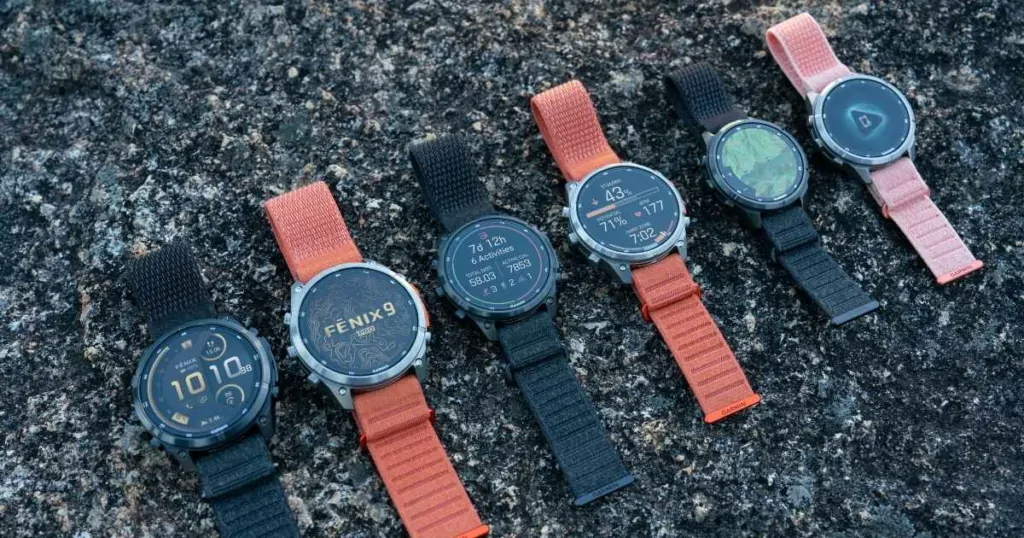
In an ultra trail your watch stops being an accessory and becomes part of your kit. It tells you how much of the climb is left, gets you back on course when you miss a marker in the dark, reminds you to eat when your head is somewhere else. Above all, it has to make it to the finish line, whether that is after 8 hours or after 40. Working out which Garmin to choose for ultra trail means starting from a few precise questions: how long your races last, how much you need to navigate, how much weight you are willing to carry on your wrist.
In this guide we lay out the criteria that really matter and then go through the Garmin watches you can find at MioMio Run, from the Forerunner for your first 50K to the fēnix for 100 miles.
In short
- First ultra, up to 50-60 km: Forerunner 570 or Forerunner 265. Barometric altimeter and multi-band GPS, no maps.
- Ultras up to 100 km with mountain training: Forerunner 965 or Forerunner 970. Topographic maps in a lightweight watch.
- 100 miles, multi-day races, self-supported outings: fēnix 8 or fēnix 9 in the 51 mm size. Maps, flashlight and multi-day battery.
- Toughness and battery life without maps: Instinct 3.
- Areas with no phone coverage: fēnix 9 Pro inReach, or an inReach Mini 3 Plus paired with your watch.
What an ultra trail watch needs
Criteria first, models second. There are six, in order of importance.
1. Real battery life, not spec-sheet battery life
This is the first filter and the one that rules out the most watches. Garmin’s claimed hours are measured in ideal conditions: mild temperatures, no notifications, a screen that only lights up when needed. Race day is different. The cold of a night at altitude reduces battery capacity, map navigation drains power, and so do the flashlight and an always-on display. A sensible rule: keep at least a 30% margin over the hours you expect to spend on course.
2. Barometric altimeter
In trail running, elevation gain matters as much as distance. A barometric altimeter measures altitude and elevation gain far more accurately than GPS alone, and it powers features like ClimbPro. For ultras, a watch without a barometer is simply off the list.
3. Multi-band GPS
Multi-band (or dual-frequency) GPS receives two signals per satellite and keeps your track more accurate in narrow valleys, dense forest and beneath rock walls. It uses more power, but recent Garmins have SatIQ, which switches to the most accurate mode only when needed and saves battery on the rest of the course.
4. Maps and navigation
This is where Garmin watches split into two families:
- With onboard topographic maps (fēnix, Forerunner 965 and 970): you see trails, contour lines and junctions on your wrist. Useful when you lose the track or when you train on routes you don’t know.
- With course navigation (Forerunner 570, 265, 170, Instinct 3): the GPX track appears as a line to follow, with an alert if you go off course. In a well-marked race that is enough; on a solo training run in the mountains it is a limitation.
On the models with maps you also get ClimbPro, which splits the course into climbs and shows the remaining distance, elevation gain and gradient for each one. In an ultra it is one of the most used features: knowing there are 400 metres of climbing left changes how you manage your effort.
5. Flashlight, glass, toughness
The built-in LED flashlight doesn’t replace your headlamp (which stays on the mandatory kit list), but it is incredibly handy for reading a sign, finding a gel in your vest or spotting the marker at an aid station without dazzling the people around you. Sapphire glass protects the screen from scratches against rock and poles.
6. Weight and comfort on the wrist
After 20 hours even 20 extra grams make themselves felt, and during an ultra your wrist tends to swell. A compact watch, or an adjustable fabric strap, makes more difference than you might think.
How much battery you really need for your race
A reference table, with typical times for a trained amateur runner:
| Race type | Typical race time | Recommended GPS battery life |
|---|---|---|
| Short ultra (50-60 km) | 6-12 hours | at least 15-18 hours |
| Mid-length ultra (80-100 km) | 12-24 hours | at least 30 hours |
| 100 miles (160-175 km) | 24-46 hours | 50 hours or more, or charging on the go |
| Multi-day races (over 300 km) | up to 150 hours | extreme power-saving modes and planned charging |
A concrete example: UTMB (about 175 km) has a cut-off of 46 and a half hours, the Tor des Géants (about 330 km) 150 hours. In multi-day races no watch makes it to the finish in full GPS mode: you work with power-saving modes and a power bank in your vest.
The Garmin ultra trail watches you can find at MioMio Run
All the battery figures below are Garmin’s claimed figures. We include them to compare the models with each other, not as a promise of how long they will last in a race.
fēnix 9, fēnix 9 Pro and fēnix 9 Pro inReach: the best for long ultras
The fēnix 9 is Garmin’s latest outdoor flagship, launched in August 2026. For ultras it has everything: topographic maps with 64 GB of storage, multi-band GPS with SatIQ, barometric altimeter, ClimbPro, real-time stamina and grade-adjusted pace. Maps pan faster than on the fēnix 8 and the new perspective view helps you read the terrain ahead.
With the fēnix 9 Garmin introduced new GPS modes, so the figures can’t be compared one to one with previous models. For the fēnix 9 Garmin claims up to 30 hours in standard GPS on the 47 mm and up to 54 hours on the 51 mm, rising to 81 and 145 hours in Max Battery mode. The fēnix 9 Pro reaches 32 hours on the 47 mm and 56 hours on the 51 mm, with a full titanium case, an AMOLED display up to 3,000 nits (readable even in midday sun on a ridge) and an LED flashlight, with a green-light mode that doesn’t ruin your night vision. An important detail: the flashlight is on the Pro, not on the standard fēnix 9.
The fēnix 9 Pro inReach adds satellite communication: SOS, messaging and location sharing even where your phone has no signal. If you train alone at altitude or race in remote areas, it gives you the safety of a satellite communicator without carrying a second device.
Who it’s for: runners doing 100 miles or multi-day races, self-supported long runs in the mountains, anyone who wants one watch for everything (ski touring, cycling and everyday life too). Who it’s not for: runners doing ultras up to 50-60 km on marked courses. You’d be paying for features you won’t use, and wearing a heavier watch than a Forerunner.
fēnix 8: fēnix battery life at a more accessible price
The fēnix 8 has the same sensors as the fēnix 9 (heart rate, multi-band GPS, altimeter, compass), topographic maps with 32 GB, ClimbPro, real-time stamina and, on every version, an LED flashlight. In our catalogue we have the AMOLED version in 47 and 51 mm.
In terms of claimed battery life it is still one of the strongest ultra watches: the 51 mm reaches 84 hours in GPS only and 62 hours in multi-band, the 47 mm 47 and 35 hours. What do you give up compared with the fēnix 9? A less bright display, half the map storage and maps that are a little slower to pan. For a 100-miler these differences matter very little.
Who it’s for: anyone who wants a fēnix for long ultras and doesn’t need the latest generation. The 51 mm is currently one of the best battery-to-price ratios in the range. Who it’s not for: runners with slim wrists who struggle with a 51 mm; in that case the 47 mm or a Forerunner is a better fit.
Forerunner 970 and Forerunner 965: maps in a lightweight watch
If the fēnix feels too big, the 9 series Forerunners are the answer. They have onboard topographic maps, ClimbPro, multi-band GPS, a barometric altimeter and all of Garmin’s training metrics, in a watch that weighs just over 50 grams.
The Forerunner 970 (56 g) is the most complete: sapphire glass, LED flashlight and features like Up Ahead, which shows the distance to the next points on your course (aid stations, cut-offs, summits). Garmin claims 26 hours in GPS only and 21 hours in multi-band. Paired with the HRM 600 chest strap it adds metrics such as running economy.
The Forerunner 965 (53 g) has slightly longer battery life in GPS only (31 hours, 19 in multi-band), maps and ClimbPro, but no flashlight and no sapphire. It is the smartest choice if you want maps without moving up a price bracket.
Who it’s for: runners doing ultras up to 100 km, anyone looking for a complete training watch that also handles long mountain days, anyone who wants maps without the weight of a fēnix. Who it’s not for: runners aiming for 100 miles who don’t want to deal with charging on the go. Beyond 24-26 hours a Forerunner only gets there with a power bank.
Instinct 3: tough and long-lasting, but no maps
The Instinct 3 is Garmin’s “rugged” watch: fibre-reinforced polymer case, large buttons you can use with gloves on, LED flashlight, multi-band GPS with SatIQ, altimeter and compass. In our catalogue we have the AMOLED version in 45 and 50 mm.
Battery life is its strong point for the price: up to 40 hours in GPS only and 30 in multi-band on the 50 mm (28 and 21 hours on the 45 mm). The limitation is navigation: no maps and no ClimbPro, the course is followed as a line with a back-to-start function.
Who it’s for: runners doing well-marked races who want a watch that doesn’t fear falls, mud and cold, with generous battery life without fēnix prices. Who it’s not for: runners who often train on new trails and want to see where they’re going.
Forerunner 570 and Forerunner 265: for your first ultra
These are watches born for the road, but with the right basics to get started with ultras: barometric altimeter, multi-band GPS, AMOLED display and all the training load and recovery metrics. No maps: the course is followed as a line, with an off-course alert and back-to-start.
The Forerunner 570 (42 or 47 mm) is the newest, with around 14 hours in multi-band on the 47 mm. The Forerunner 265 claims 20 hours in GPS only and 14 in multi-band, and it is still an excellent training watch.
Who it’s for: runners preparing their first 50K, those who mostly run on the road and do some trail, anyone who wants a light watch for everyday life too. Who it’s not for: runners who spend more than 12-14 hours on course, or who train off-trail in the mountains.
Forerunner 170: the bare essentials for trail
The Forerunner 170, released in May 2026, is the most affordable Garmin we recommend for trail running, because it has a barometric altimeter (its little brother, the Forerunner 70, doesn’t). It claims 20 hours in GPS only and 14 with all satellite systems, weighs 41 grams and has useful metrics such as trail-specific VO2 max and grade-adjusted pace. It has no multi-band GPS and no maps. The Music version adds offline music.
Who it’s for: runners getting into trail who want a reliable training watch on a tight budget. Who it’s not for: anyone who already has an ultra over 50 km on the calendar. Better to step up.
Comparison table
| Model | Topographic maps | Multi-band GPS | Barometric altimeter | Flashlight | Claimed GPS battery life | Best for |
|---|---|---|---|---|---|---|
| fēnix 9 Pro / Pro inReach | Yes | Yes | Yes | Yes | up to 32 h (47 mm), 56 h (51 mm) | 100 miles, multi-day, remote areas |
| fēnix 9 | Yes | Yes | Yes | No | up to 30 h (47 mm), 54 h (51 mm) | 100 miles, multi-day |
| fēnix 8 AMOLED | Yes | Yes | Yes | Yes | up to 47 h (47 mm), 84 h (51 mm) | 100 miles, long ultras |
| Forerunner 970 | Yes | Yes | Yes | Yes | up to 26 h | Ultras up to 100 km |
| Forerunner 965 | Yes | Yes | Yes | No | up to 31 h | Ultras up to 100 km |
| Instinct 3 AMOLED | No | Yes | Yes | Yes | up to 28 h (45 mm), 40 h (50 mm) | Marked races, heavy use |
| Forerunner 570 | No | Yes | Yes | No | about 14 h in multi-band (47 mm) | First ultra |
| Forerunner 265 | No | Yes | Yes | No | up to 20 h | First ultra |
| Forerunner 170 | No | No | Yes | No | up to 20 h | First trail races |
Battery life in standard GPS mode according to Garmin’s data. On the fēnix 9 Garmin uses new GPS modes, which is why the figures can’t be directly compared with those of the fēnix 8.
In a nutshell: the Forerunner 570 is the watch for your first ultra, the 970 the one for fast ultras, the fēnix the one for ultras that last more than a day.
Which Garmin to choose for your race
You’re preparing for your first 50K. No need to spend a lot. A Forerunner 570 or 265 covers the race with room to spare and remains an excellent watch for the rest of the year. If your budget is tight, the Forerunner 170 does the job.
You run ultras between 80 and 100 km and train in the mountains. This is where maps start to make a difference. Forerunner 965 if you want to spend less, Forerunner 970 if you want the flashlight, sapphire and Up Ahead. For races that might go beyond 20 hours, consider a 47 mm fēnix.
You’re aiming for 100 miles or multi-day races. 51 mm size, no question: fēnix 8 if you care about battery-to-price ratio, fēnix 9 or fēnix 9 Pro if you want the latest generation, a brighter display and more responsive maps.
You often train alone in remote areas. fēnix 9 Pro inReach, or any watch you like paired with the inReach Mini 3 Plus.
You want an indestructible watch and don’t need maps. Instinct 3 in 50 mm.
The accessories that make a difference in an ultra
Some Garmin accessories change your race experience more than a watch upgrade:
- UltraFit nylon straps: fabric with hook-and-loop closure, they adjust to the millimetre when your wrist swells after many hours and don’t chafe with sweat. The 22 mm fits the 47 mm fēnix and the Forerunner 965 and 970, the 26 mm the 51 mm fēnix.
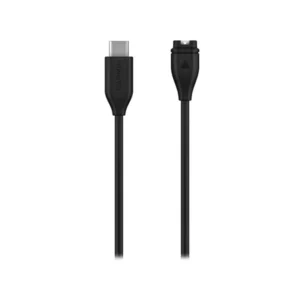
- USB-C charging cable: together with a light power bank in your vest it lets you charge your watch during the race. Garmins keep recording the activity while charging: the best moment is at an aid station or on an easy section.
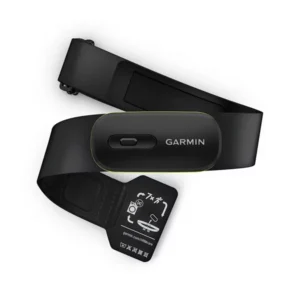
- HRM 600 heart rate strap: more accurate than wrist-based heart rate during hard efforts and uphill repeats, with running dynamics and a rechargeable battery. More useful in training than in long ultras, where many runners prefer not to wear a strap for 20 hours.
- inReach Mini 3 Plus: compact satellite communicator with SOS, messaging and tracking. It is the solution if you want satellite safety without changing watch.
-
UltraFit Nylon watch straps(22 mm)
Price range: 36,00€ through 39,99€ VAT included -
UltraFit nylon straps (26 mm)
Price range: 36,00€ through 45,00€ VAT included -
USB-C data/charging cable
Original price was: 24,99€.24,00€Current price is: 24,00€. VAT included -
HRM 600 heart rate monitor
Original price was: 169,99€.159,00€Current price is: 159,00€. VAT included

If you are also choosing where to carry your power bank, flasks and mandatory kit, have a look at our trail running vests and packs.
Which Garmins to avoid for ultra trail
Two common mistakes:
- Models without a barometric altimeter, such as the Forerunner 70 and the vívoactive 6. They measure altitude with GPS only, with errors of tens of metres and unreliable elevation gain.
- Smartwatches designed for everyday life, such as the Venu. Great watches, but without maps and with GPS battery life designed for workouts of a few hours, not for a whole night in the mountains.
How to set up your Garmin for race day
The right watch matters, but so does how you set it up. Before the race:
- Load the official course as a GPX file into Garmin Connect and send it to your watch as a course (here is Garmin’s official procedure). That way you get ClimbPro, the off-course alert and the real distance remaining.
- Add aid stations and cut-offs as course points, so you can see them with Up Ahead on the models that support it.
- Choose your GPS mode: SatIQ is the best compromise between accuracy and battery. For multi-day races, test the power-saving modes in training.
- Cut unnecessary drain: always-on display off, phone notifications off, brightness down.
- Set eating and drinking reminders: after a few hours hunger and thirst are no longer reliable, an alert on your wrist is.
- Simplify your data screens: in a race you only need time, distance, elevation gain, heart rate and the climb profile.
- Test everything on a long run: battery, screens, charging with the power bank. Nothing new on race day.
Frequently asked questions about Garmin for ultra trail
How many hours of battery do you need for an ultra trail?
At least 30% more than the time you expect to spend on course, in the GPS mode you will actually use. For an 8-10 hour 50K, 15 hours of battery life is enough; for 100 miles you need 50 hours or more, or a charging plan with a power bank.
Do you really need maps on your watch?
In a well-marked race, no: the course line with an off-course alert is enough. They become valuable on training runs on new trails, in races with poor marking and when you need to find an alternative route, for example because of bad weather.
fēnix or Forerunner for ultra trail?
It depends on the duration. Up to 20-24 hours of racing, a Forerunner 965 or 970 offers maps and complete metrics with less weight. Beyond that, the 51 mm fēnix is the only one that reaches the finish without charging.
Can you charge your Garmin during a race?
Yes. You connect the watch to a power bank with the charging cable and it keeps recording the activity. It’s best to do it on an easy section or at an aid station, because with the cable attached the watch is less convenient to check.
Is multi-band GPS useful in trail running?
Mostly in narrow valleys, dense forest and near rock walls, where standard GPS tends to get the track wrong. With SatIQ the watch only uses it where needed, so the battery cost is limited.
Come and try them on
An ultra trail watch is also chosen on the wrist: the difference between a 47 and a 51 mm, or between a Forerunner and a fēnix, becomes clear within thirty seconds of wearing them. Come and see us in San Vendemiano or Pordenone with your next race in mind: we’ll start from there and find the right Garmin together. If you prefer to order online, you’ll find all the models with up-to-date sizes and availability in the Garmin category of our shop.