 ITA
ITA
 DEU
DEU
 FRA
FRA
 ESP
ESP




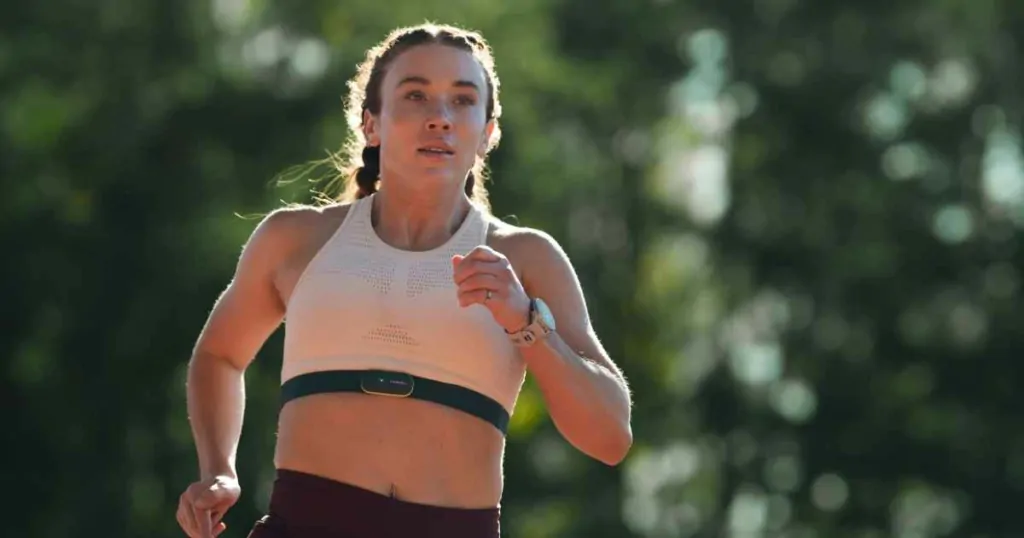
A run can be well planned, with the right shoes and technical clothing, and still turn unpleasant after a few kilometres if your sports bra does not control breast movement properly. Knowing how to choose a running bra with the right support means preventing chafing, shoulder discomfort and that feeling of having to readjust it constantly while you run. It is not an aesthetic detail: it is a technical part of your kit, just like socks and shoes.
Breast movement during running happens in several directions, not only up and down. An effective running bra limits this motion without squeezing the chest so much that it restricts breathing. The right choice depends on size, torso shape, training intensity and how you prefer to put the bra on and take it off. That is why two runners with the same cup size can need very different models.
In short
- For running you almost always need high support: medium support is fine for easy jogging, walking and the gym.
- Compression for small and medium cups, encapsulation (or hybrid designs) from a C cup upwards.
- The underband does most of the work: it must stay put and horizontal.
- Test it on the move and then on a short run: standing still, almost every bra feels perfect.
How to choose a running bra based on support
The first reference is the support level stated by the manufacturer. For road running, intervals, trail running and workouts with jumps or changes of direction you normally need high support. Medium-support models can work for very easy jogging, brisk walking, the gym or the exercise bike, but they are not always enough when the pace picks up or the runs get longer.
Be careful, though, not to choose just by reading the label. What counts as “high support” is not the same for every brand. Construction matters most: a wide, stable underband, straps that do not give, a supportive fabric and a structure that keeps the breasts close to the chest. With a small cup, good compression may be enough; from a C cup upwards, a model that separates and supports each breast is often more effective.
Brooks, for example, develops its running bras with the Research Group in Breast Health at the University of Portsmouth and lab-tests them specifically for reducing movement while running: that is why it is the brand with the widest range of high-impact models in our catalogue.
Compression or encapsulation?
Compression bras hold the breasts against the chest. They are simple, often lightweight and easy to pull on, and they can work very well for petite builds or small and medium cups. Their limit is that, as bust volume increases, the pressure needed to stabilise can become excessive or spread the support unevenly.
In the Brooks Drive line, compression is designed specifically for running: the Drive Plunge combines compression and mesh inserts for high-impact runs, the Drive Interlace has a hook-and-eye closure and bonded seams, the Drive 3 Pocket adds two mesh side pockets and one for your phone, and the Drive Mesh has a high neckline and removable cups. In the same group you will find the Craft Motion Bra, padded and with adjustable straps, for medium and high-intensity training.
-
Drive Plunge Run Bra
Original price was: 40,00€.32,00€Current price is: 32,00€. VAT included -
Drive Interlace Run bra women
Original price was: 45,00€.36,00€Current price is: 36,00€. VAT included -
Drive 3 Pocket Run Bra
Original price was: 45,00€.38,00€Current price is: 38,00€. VAT included -
Motion Bra women
Original price was: 59,95€.51,00€Current price is: 51,00€. VAT included
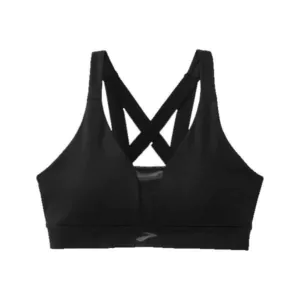
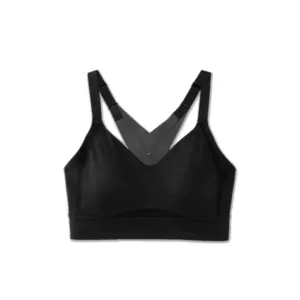
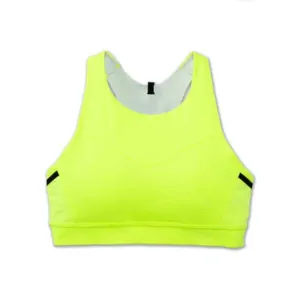
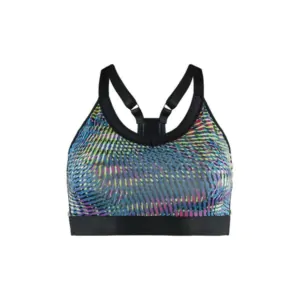
Models with separate cups, also called encapsulation bras, support each breast individually. They tend to offer a more structured fit, better control of bounce and a more natural shape. They are a particularly good choice for frequent runs, long distances and medium or full busts. There are also hybrid designs that combine encapsulation and compression: they are often an excellent compromise if you want a secure hold without feeling too rigid.
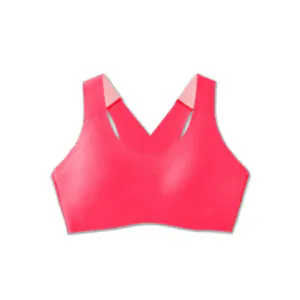
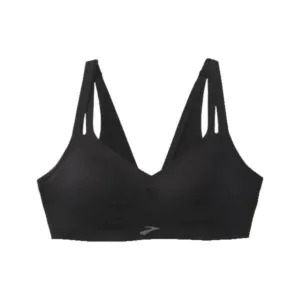
This is the approach of the Brooks Dare line: the Dare Crossback 2 has moulded cups that lift and support and pulls on over the head, with no hooks (the first version, the Dare Crossback, is also available); the Dare Strappy offers the same high-impact support with thin straps and more freedom around the shoulders. The Scoopback 2.0 has built-in cups, adjustable straps and a back closure, and Brooks also recommends it for breastfeeding mums.
-
Dare crossback Run bra women
Original price was: 55,00€.44,00€Current price is: 44,00€. VAT included -
Dare Strappy Run Bra
Original price was: 50,00€.40,00€Current price is: 40,00€. VAT included
What about the gym, yoga and walking?
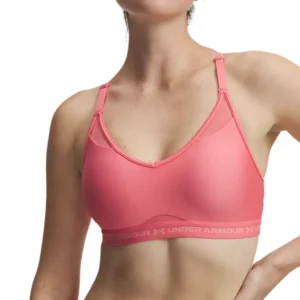
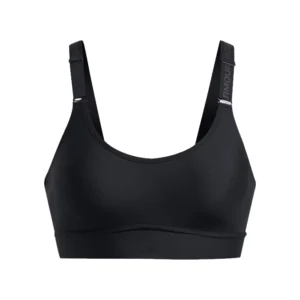
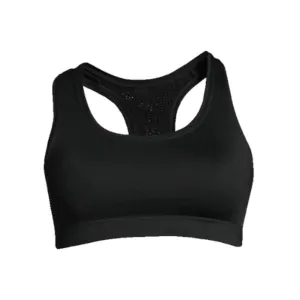
If you mainly need a bra for low or medium-impact training, you can choose a lighter, less structured model. The Under Armour Infinity 2.0 Mid offers medium support, adjustable straps and a hook closure; the Crossback Mid has removable cups and crossed straps. For yoga, pilates and walking there are the Crossback Low, the Craft Training Bra Classic and the Falke Madison Low, which has no side seams and suits small and medium cups. The Casall Iconic Sports Bra is the most versatile of the group, designed for both low and high-impact activities. For actual running, though, go back to the models in the two previous sections.
-
Infinity 2.0 Mid women
Price range: 36,00€ through 40,00€ VAT included -
Crossback Mid Bra women
Price range: 21,00€ through 30,00€ VAT included -
Iconic Sports Bra women
Original price was: 49,00€.24,00€Current price is: 24,00€. VAT included -
Crossback low
30,00€ VAT included

Size: where you really need to start
A running bra should not fit like the everyday bra you chose years ago. Bodies change, and fit and sizing can also vary from one brand to another. When possible, it is worth measuring your underbust and bust again, then comparing the measurements with the manufacturer’s own size chart, rather than relying only on S, M or L.
Both systems are present in our catalogue. Craft, Under Armour, La Sportiva, NNormal and Casall use letter sizes (XS, S, M, L), while Brooks bras have a size made of band and cup, for example 32C or 36D. It is a more precise system, but read it against the Brooks size chart: the number may not match the sizes of your everyday bra.
The underband does most of the work. It should sit horizontally around your torso and stay snug without riding up your back. If it moves upwards while you run, it is probably too loose, or the straps have been tightened too much to compensate. If instead it leaves deep marks, restricts your breathing or hurts your ribs, the band may be too tight.
The cup must also fully contain the breast. Fabric cutting in at the top, spilling at the sides or empty wrinkles are signs of the wrong size or shape. A cup that is too small limits movement only through pressure; one that is too big does not stabilise effectively. The sweet spot is an even feeling of containment, without constriction.
Three checks in front of the mirror
Before removing tags and hygiene liners, it is worth doing a quick dynamic test:
- Raise your arms: the band and cups should stay in place.
- Do a few small jumps or jog on the spot: it is the quickest way to judge how well movement is really controlled.
- Take a deep breath: your chest needs room to work under effort.
If the bra has a back closure, try it first on the loosest hook. With use the band can stretch slightly, and the other hooks will help you restore a snug fit. With pull-on models, with no closure, choosing the size needs even more care: they should go on with a little resistance, but without having to force them over your shoulders and ribs.
Straps, back and closures: small details, big difference
The straps should not be what mainly holds the breasts up. Their job is to stabilise the fit, not to carry all the weight. Wide, padded straps help spread the pressure, especially with fuller cups; adjustable ones allow a more precise fit for long torsos or narrow shoulders.
The back design affects both support and freedom of movement. A racerback is stable and leaves the shoulder blades free, but it can be less comfortable to put on if the bra has no closure. A traditional back with hooks makes adjustment easier. Some models let you switch the straps to a crossed configuration: this is the case with the Brooks Drive Convertible, which can be worn with a scoopback or a racerback and has adjustable back straps. It is a useful solution when you want a firmer hold, but try it first, because it can increase pressure on the trapezius and neck.
Front zips and front closures are practical, especially after a hard session. They must, however, have an inner flap to protect the skin and a reliable locking system. In a running garment, a zip that rubs on the breastbone or tends to open is not an acceptable compromise.
Fabrics and seams for running without irritation
Support is not enough if the fabric holds sweat or the seams work against your skin. To train consistently you need breathable technical fabrics that dry quickly and keep their stretch. A lightweight fabric feels great in summer, but it should not become too thin in the areas that need containment.
Check carefully the areas most exposed to chafing: underband, sides of the chest, armpits and where the straps touch the skin. Flat or bonded seams, soft edges and well-finished panels reduce the risk of irritation, especially on long runs or in the rain. Removable pads can be welcome for coverage and shape, but if they fold or shift in the wash they can become more annoying than useful.
Trail running: pockets and hold over long distances
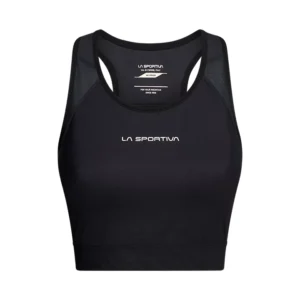
For trail running, a bra with a tougher fabric and a very firm band may be preferable: descents, uneven footing and a hydration vest increase stress and contact points. This is also where pockets come in. The La Sportiva Stash Bra has medium support, a small pocket between the shoulder blades for your phone and a larger one to stash your top on hot days. The NNormal Trail Crop Top 02 has three integrated pockets for gels and keys, removable cups and a slightly longer cut for a more stable feel. The La Sportiva Hover Top is seamless, with wide straps, double-layer construction and a back phone pocket, designed for medium and long distances.
-
Stash Bra women
Original price was: 60,00€.48,00€Current price is: 48,00€. VAT included -
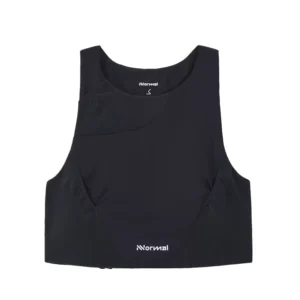
Trail Crop Top 02 women
90,00€ VAT included
Hot and cold: choose the fabric by season
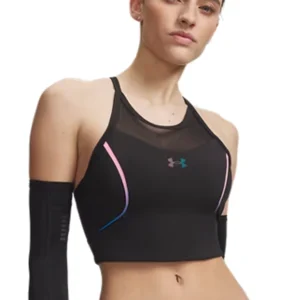
On hot days it can make sense to prioritise ventilation and quick drying, as long as the level of support stays adequate. The Under Armour Velociti Elite Crop Top uses an ultralight HeatGear fabric with power mesh panels and anti-odour treatment; among the high-impact models, the Brooks Drive Interlace has mesh in the areas where you sweat most. When temperatures drop, the seamless Craft Wool Seamless Bra in merino wool helps regulate temperature and limit odours on cold or damp runs (for the rest of your kit, here is our advice on what to wear in autumn and winter).
-
Velociti elite crop top women
Original price was: 70,00€.56,00€Current price is: 56,00€. VAT included -
Wool Seamless Bra women
Original price was: 59,95€.51,00€Current price is: 51,00€. VAT included

Don’t judge it standing still
The decisive test is not the fitting room, it is training. A model that feels perfect for two minutes can show its limits after eight kilometres, when sweat, breathing and repeated movement change how the fit feels. For the first runs, choose a short distance and watch for chafing, neck tension, unusual marks or the need to readjust.
Care also preserves performance. After each use, wash the bra following the instructions on the label and avoid fabric softener and the tumble dryer when not recommended. Heat and harsh washing can damage the elastic fibres, gradually reducing support. Rotating at least two running bras helps each one recover its shape between sessions.
You will find every model, with up-to-date sizes and availability, in the women’s underwear category of our shop. If you are torn between two sizes or between compression and encapsulation, write to us or visit one of our stores: a test on the move tells you more than any size chart.
A good sports bra is something you forget about while you run: it does not pull, rub, shift or ask for attention. If you can focus only on your pace, your breathing and the route, the support is probably right.